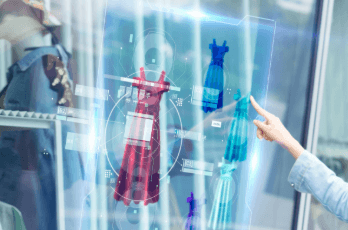
Emerging technologies are reshaping fashion development with AI-guided design and rapid prototyping. Generative sketching yields fast concept exploration while preserving creative autonomy. Digital prototyping shortens iteration cycles and provides measurable progress. Wearable sensors and responsive materials redefine garments as data-driven experiences. Immersive retail and personalized analytics raise questions about privacy and ethics. The ecosystem invites collaboration across design, engineering, and data disciplines, inviting further inquiry into how these forces will converge and scale.
How AI-Driven Design Is Redefining Fashion Development
AI-driven design is reshaping fashion development by enabling rapid prototyping, data-informed aesthetics, and iterative experimentation. The approach blends AI assistedDesign with perceptive feedback loops, enabling designers to test concepts at speed while preserving creative autonomy. GenerativeSketching translates abstract briefs into adaptable silhouettes, fostering exploration without constraint. This method invites curiosity, precision, and freedom, guiding measurable progress across collections and collaborations.
3D Printing and Digital Prototyping for Rapid Iteration
D Printing and digital prototyping enable rapid iteration by transforming concept sketches into tangible, testable models within days rather than weeks. The approach empowers designers to evaluate fit, structure, and silhouette early, reducing uncertainty.
3D printing and digital prototyping streamline decision cycles, enabling iterative refinement, material exploration, and creative freedom while preserving precision, reproducibility, and efficiency throughout concept-to-prototype workflows.
Smart Textiles and Wearables: From Fabric to Function
Smart textiles and wearables fuse fabric science with integrated sensors and actuators, translating thermal, electrical, and biochemical signals into responsive user experiences. The field blends textile engineering with responsive materials, enabling dynamic garments and accessories. Wearable sensors monitor conditions, while conductivity advances enable seamless interfaces. This trajectory invites experimentation, collaboration, and freedom, shaping adaptive textiles for everyday resilience and expressive function. two word ideas: fabric science, textile engineering
Immersive Retail and Data-Driven Personalization in Fashion
Immersive retail platforms fuse physical and digital experiences to tailor shopping journeys, leveraging data-driven insights to forecast preferences and guide on-site decisions.
In fashion, these systems enable real-time personalization while preserving user autonomy, inviting experimentation with choices and pacing.
Prospects include scalable recommendations, privacy-conscious analytics, and ethical framing of data use, shaping a responsive ecosystem where immersive retail and data driven personalization redefine discovery.
See also: The Future of Digital Identity Protection
Frequently Asked Questions
What Are the Ethical Implications of Ai-Generated Fashion?
The ethical implications of ai generated fashion challenge accountability and consumer data privacy, while highlighting sustainability intersection concerns; rapid prototyping and wearables reshape future fashion designers’ skills, affecting roi of immersive retail experiences and immersive retail, and broader creativity.
How Does Sustainability Intersect With Rapid Prototyping?
Sustainability intersects with rapid prototyping through measured tradeoffs; while faster cycles enable experimentation, they may increase waste if designed without end-of-life plans. The analysis weighs sustainability tradeoffs against rapid prototyping timelines, seeking responsible, freedom-friendly innovation.
Can Consumer Data Privacy Be Ensured in Wearables?
82% of users disable data sharing on wearables; privacy can be ensured through robust privacy controls and data governance, enabling safer experimentation. The approach remains curious, precise, forward-looking, and freedom-minded, focusing on transparent practices and user-centric data stewardship.
What Skills Will Future Fashion Designers Need?
Future designers will need future skillsets rooted in design adaptability, collaboration across disciplines, and cross cultural storytelling. They approach experimentation curiously, value interdisciplinary dialogue, and pursue freedom-driven innovation that anticipates change with precise, forward-looking, globally resonant aesthetics.
How Do We Quantify the ROI of Immersive Retail Experiences?
ROI metrics for immersive retail hinge on measuring customer engagement through AR/VR experiences, enabling a clear narrative: a village forge reveals silver, but immersive tech quantifies value—conversion lift, dwell time, and repeat visits as tangible ROI metrics for immersive retail.
Conclusion
In this evolving landscape, fashion bridges art and algorithm, constantly refining form through AI guidance, rapid prototyping, and responsive textiles. Designers harness perceptive feedback to test concepts with velocity, while digital twins forecast performance across contexts. Wearables transform garments into data-enabled experiences, and immersive retail personalizes journeys without compromising privacy. Looking ahead, a wearable-fusion ethos emerges: couture-inspired efficiency meets ethical computation, yielding scalable collaboration where human curiosity and machine precision co-create tomorrow’s wardrobe—an anachronistic steam-punk ticker in a cloud-first era.